
Monday to Saturday - 8:00 -17:30

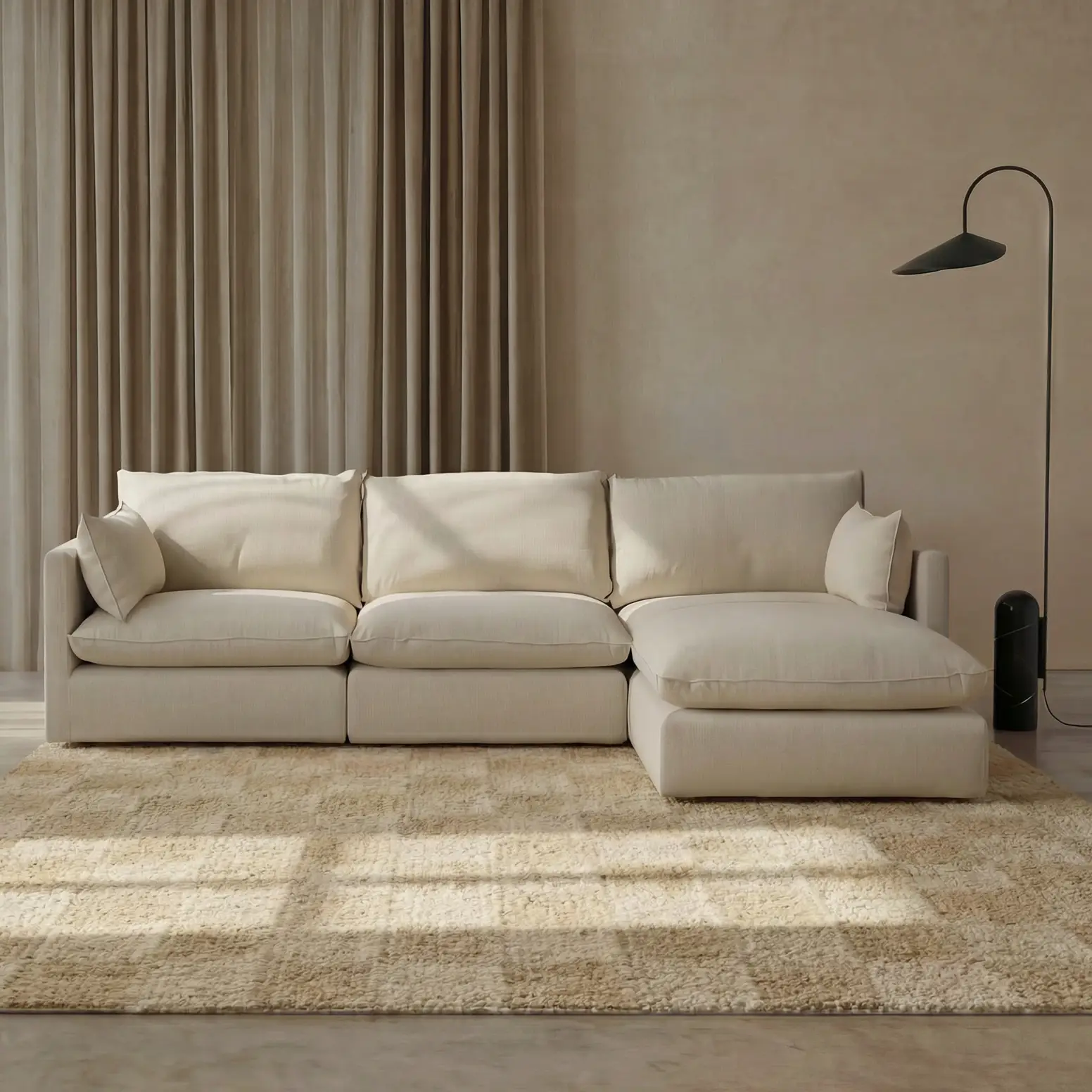
This guide looks at what actually makes a modular feel “roomy” in Australian apartments, terraces, and compact family rooms, without guessing or overcomplicating it.
What makes a modular sofa feel roomy in a small room?
A modular feels roomy when it keeps sightlines open and makes movement easy. The most reliable signs are raised legs, slimmer arms, and a layout that does not block entry points.
For modular sofas for small spaces, the goal is not the biggest seat count. It is balanced proportions, a shape that suits the room, and modules that can be rearranged when life changes.
Which modular configuration works best in Australian apartments?
A two or three-seat base plus a chaise is often the sweet spot because it gives “stretch out” comfort without needing a full corner suite. Many Australian apartments also suit an L-shape with a shallow depth, especially where the living area shares space with dining.
If they want flexibility, modular sofas for small spaces with a standalone ottoman can mimic a chaise when needed, then tuck away to open the room up.
How should they measure a small living room before buying?
They should measure wall lengths, door swings, and the main walkway, then tape the footprint on the floor. A comfortable walkway is usually about 80 to 90 cm, which matters in narrow Sydney terraces and inner-city Melbourne apartments.
For modular sofas for small spaces, measuring depth is just as important as width. A few centimetres less depth can change the whole feel of the room.
What depth and seat height help a compact room feel open?
Shallower depth often reads lighter, particularly in rooms under 3.5 metres wide. Many people find a seat depth around the mid 80 cm range comfortable, while still keeping the sofa from dominating the space.
A slightly higher seat can also help because it is easier to get in and out, and it looks less “slouchy.” That’s why modular sofas for small spaces with balanced height and depth tend to feel airier.
Do armless modules actually save space?
Yes, armless modules can reduce visual bulk and reclaim a little width. They also make it easier for people to perch on the end without needing extra chairs.
The trade-off is comfort and support. If they like lounging, one armed end can still be worth it. Many modular sofas for small spaces handle this well by mixing one arm with one open end.
Is a chaise a good idea, or does it crowd the room?
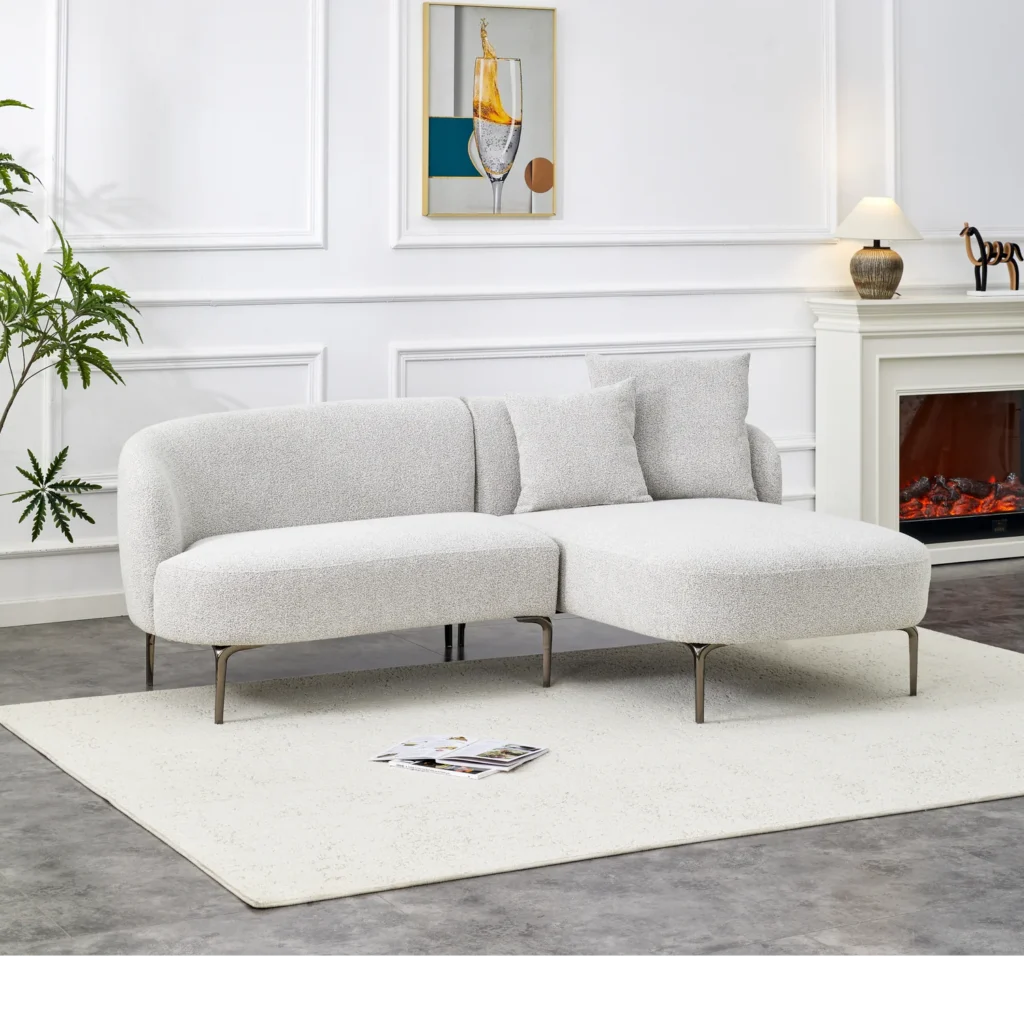
A chaise can feel luxurious in a small room because it replaces the need for a separate lounge chair and ottoman. It becomes the “favourite spot” without adding extra furniture.
It crowds the room when it blocks circulation or points into a walkway. For modular sofas for small spaces, a reversible chaise is ideal so they can swap sides when the layout changes.
What fabrics and colours make a modular feel bigger?
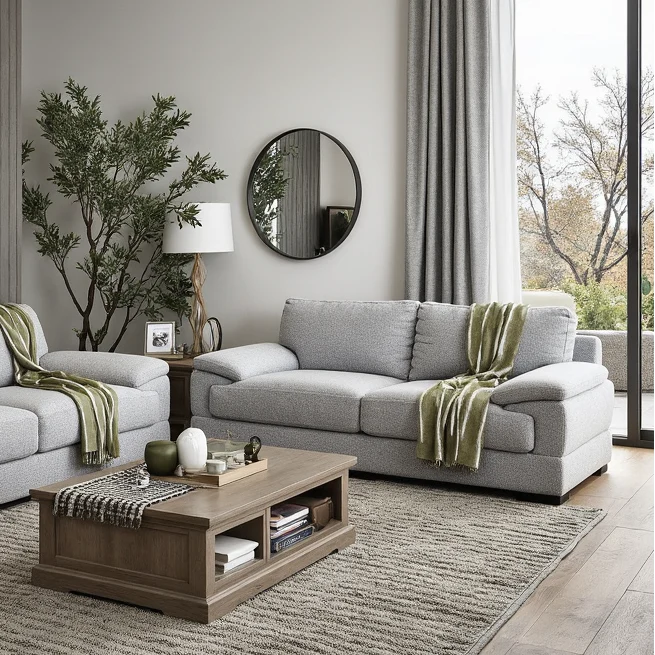
Lighter neutrals can make the room feel more open, especially in lower-light apartments. Textured weaves also hide wear and give depth without looking heavy.
That said, darker colours can still work if the sofa has legs, slim arms, and plenty of negative space around it. For many modular sofas for small spaces, the “roomy” look comes more from shape than colour. Choosing furniture with an open visual profile can make compact rooms feel less crowded.
How can they make a modular look less bulky?
They can prioritise raised legs, a higher base, and narrower arms. These details show more floor, which tricks the eye into reading the room as larger.
It also helps to keep the coffee table smaller or switch to nesting tables. When modular sofas for small spaces are paired with lighter occasional furniture, the whole zone feels less crowded.
Should they choose storage modules for a small home?
Storage is useful when the home is short on cupboards, which is common in older Australian terraces and newer compact builds. A storage ottoman can hold throws, kids’ toys, or spare linen and reduce clutter fast.
The key is not to overdo it. Too many bulky storage pieces can cancel out the airy look. The best modular sofas for small spaces use one storage element, then keep the rest visually light.
How do they avoid the “too many pieces” look?
They should choose fewer, larger modules rather than lots of small sections. A clean silhouette reads calmer, and calm rooms feel bigger.
It also helps to stick to one upholstery across all pieces and avoid mixed heights. When modular sofas for small spaces look unified, they feel more like one intentional sofa and less like scattered seating.
What layouts work best for renters who move often?
Renters benefit from modules that separate into a straight sofa, an L-shape, or a chaise setup without specialist tools. That flexibility matters when they shift from a Brisbane apartment to a Gold Coast townhouse, or between share houses.
They should also check that modules fit in lifts and stairwells. Many modular sofas for small spaces are chosen specifically because they can be carried through tight access points.
How can they style the area so it feels bigger immediately?
They can anchor the modular with a rug that is large enough for the front legs to sit on. A too-small rug makes furniture look like it is floating in a tight cluster.
Wall lighting or a slim floor lamp frees up side tables, and a mirror can bounce light in darker rooms. Modular sofas for small spaces look more expansive when the styling is simple and the floor stays visible.
What should they look for in comfort, not just size?
They should check seat firmness, back support, and whether the cushions hold shape. A small sofa that is uncomfortable will push them to add extra chairs, which makes the room feel smaller.
It helps to consider who uses it most. For households that lounge nightly, modular sofas for small spaces with supportive backs and resilient foam can feel “bigger” because people actually spread out and relax.
Which mistakes make small rooms feel smaller?
The most common mistake is buying a modular that is too deep, then squeezing it against the wall with no breathing space. Another is choosing wide arms and a heavy base, which can visually take over the room.
They can also trip up by ignoring access, like tight staircases in older Australian walk-ups. Modular sofas for small spaces only work if they fit the home and the way people live in it.
How can they choose modules that will still work in a future home?
They should aim for neutral sizing, not extreme shapes. A simple three-seat base plus an ottoman or chaise module adapts to more rooms than a huge corner build.
They can also look for brands that sell extra modules later, so the sofa can grow if they move somewhere bigger. The most practical modular sofas for small spaces are the ones that can become a larger lounge setup over time.
What is a simple checklist they can use before buying?
They can use a short checklist to avoid regret and keep the room feeling open:
- Does the layout preserve clear walkways?
- Is the depth appropriate for the room’s width?
- Do the arms and base look visually light?
- Can modules be rearranged if the room changes?
- Will it fit through the home’s access points?
When they tick these off, modular sofas for small spaces are far more likely to feel roomy, not crowded.
Where should they start if they want a roomy feel without overthinking it?
They should start with measurements, then pick the lightest-looking shape that meets their seating needs. In most small Australian living rooms, a compact L-shape or a sofa plus ottoman is the easiest win. Before deciding, it is also worth considering the questions to ask before you buy modular sofas online, including dimensions, delivery access, configuration options, and return policies.
If they focus on proportion, circulation, and flexibility, modular sofas for small spaces can genuinely make a small lounge feel like it has more room to breathe.
FAQs (Frequently Asked Questions)
What features make modular sofas for small spaces feel roomy in Australian homes?
Modular sofas for small spaces feel roomy when they keep sightlines open and make movement easy. Key features include raised legs, slimmer arms, and layouts that don’t block entry points. Balanced proportions, a shape suited to the room, and rearrangeable modules contribute to a spacious feel without focusing solely on seat count.
Which modular sofa configurations work best in Australian apartments?
A two or three-seat base paired with a chaise is often ideal, offering stretch-out comfort without requiring a full corner suite. L-shaped modular sofas with shallow depth suit living areas shared with dining rooms. Standalone ottomans provide flexibility by mimicking a chaise when needed and can be tucked away to open up space.
How should I measure my small living room before buying a modular sofa?
Measure wall lengths, door swings, and main walkways, then tape out the sofa footprint on the floor. Ensure comfortable walkways of about 80 to 90 cm, especially important in narrow terraces and inner-city apartments. Both depth and width measurements matter; even a few centimeters less depth can significantly change the room’s feel.
What depth and seat height make a compact room feel more open with modular sofas?
Shallower depths often read lighter, especially in rooms under 3.5 meters wide. A seat depth around 80 cm is comfortable while preventing the sofa from dominating space. Slightly higher seats help ease getting in and out and avoid a slouchy look, making modular sofas for small spaces feel airier with balanced height and depth.
Do armless modules save space in small rooms?
Yes, armless modules reduce visual bulk and reclaim some width, allowing people to perch on ends without extra chairs. However, they may compromise comfort and support. Many modular sofas mix one arm with an open end to balance lounging comfort with space-saving benefits.
Is including a chaise in a modular sofa suitable for small rooms?
A chaise can add luxury by replacing separate lounge chairs or ottomans, becoming a favorite spot without extra furniture. It only crowds the room if it blocks circulation or points into walkways. Reversible chaises are ideal as they allow side swapping when layouts change, maintaining flexibility in small spaces.